Lantern
An AI chat for small teams, as a native desktop app: it reads what the team has connected, shows its working, and stops to ask before anything leaves the workspace.
Studio concept · 2026 · Product design, Prototype


Maps © OpenStreetMap contributors, served by OpenFreeMap. Placeholder company marks by Logoipsum. Portraits from Unsplash.
the project
Lantern is a made-up product for the nine-person software company that already has an AI chat open all day and still can’t let it near the real work, because nobody can see what it looked at or stop it before it posts.
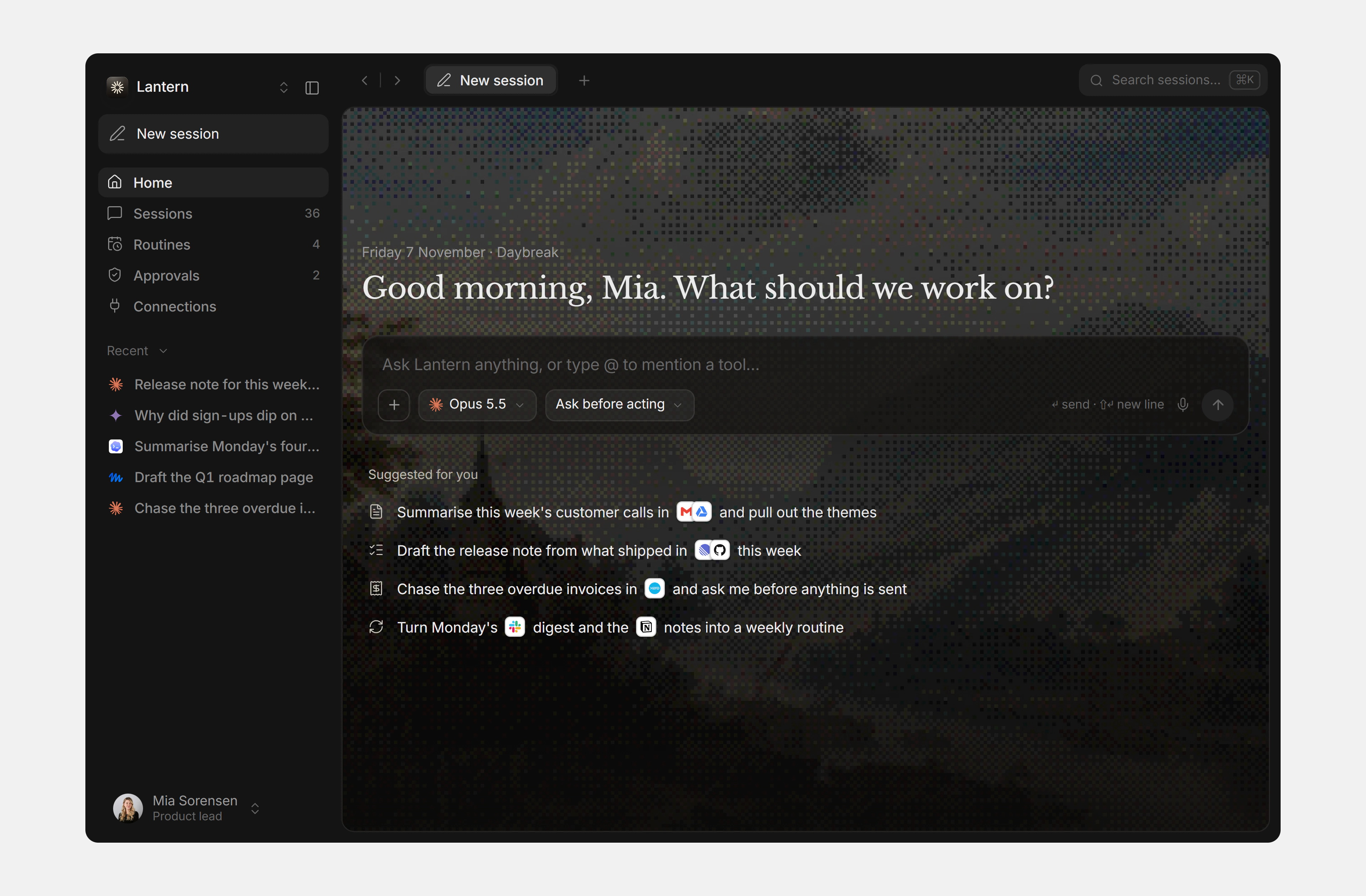
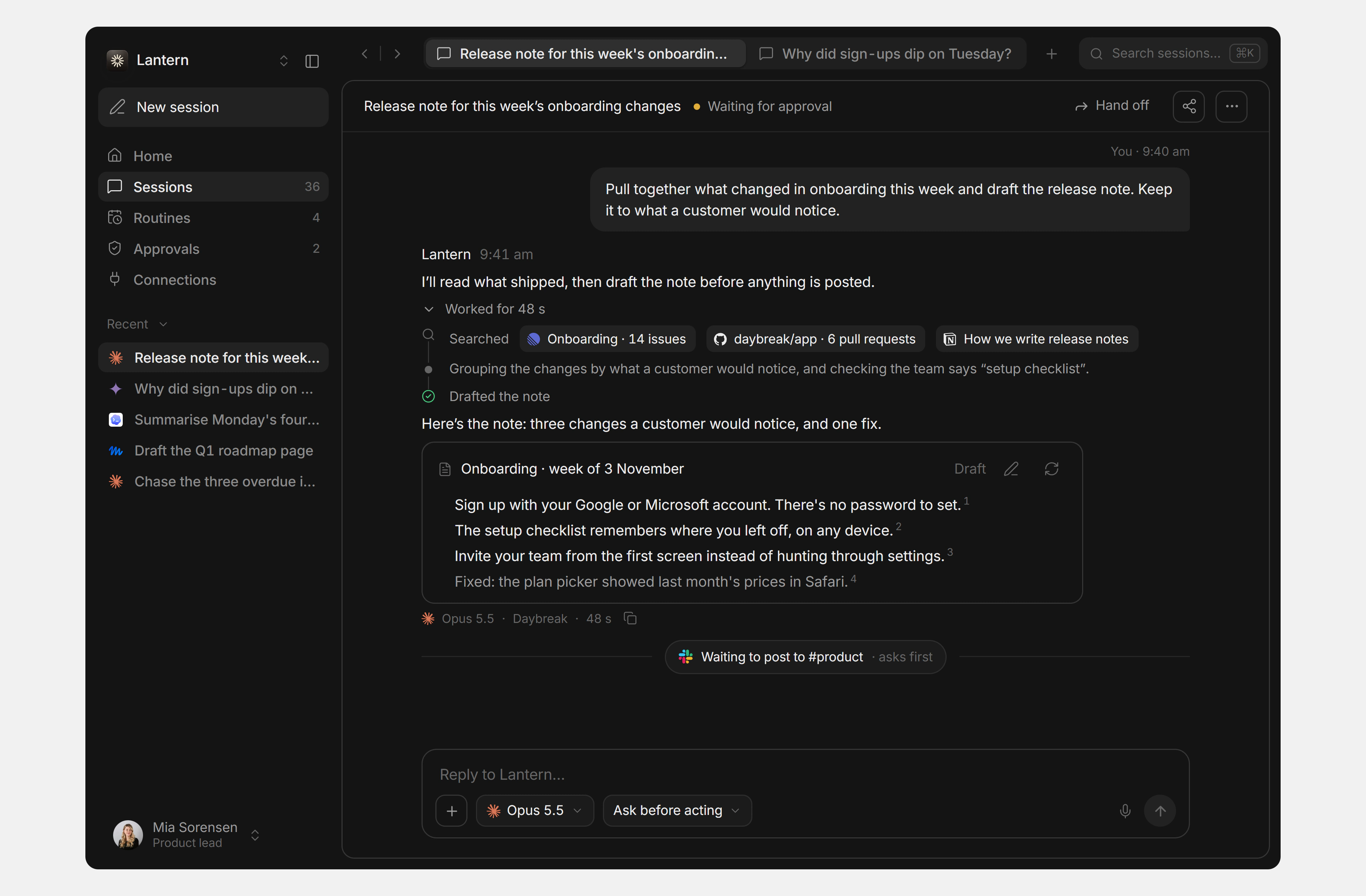
The home asks one question, what should we work on, over a painting dithered to a dot screen and a few suggested asks that name the tools they would reach into. A session is a thread: the question, a single line saying what Lantern read and how long it took, and the answer with every claim pointing back to the issue, pull request or page it came from.
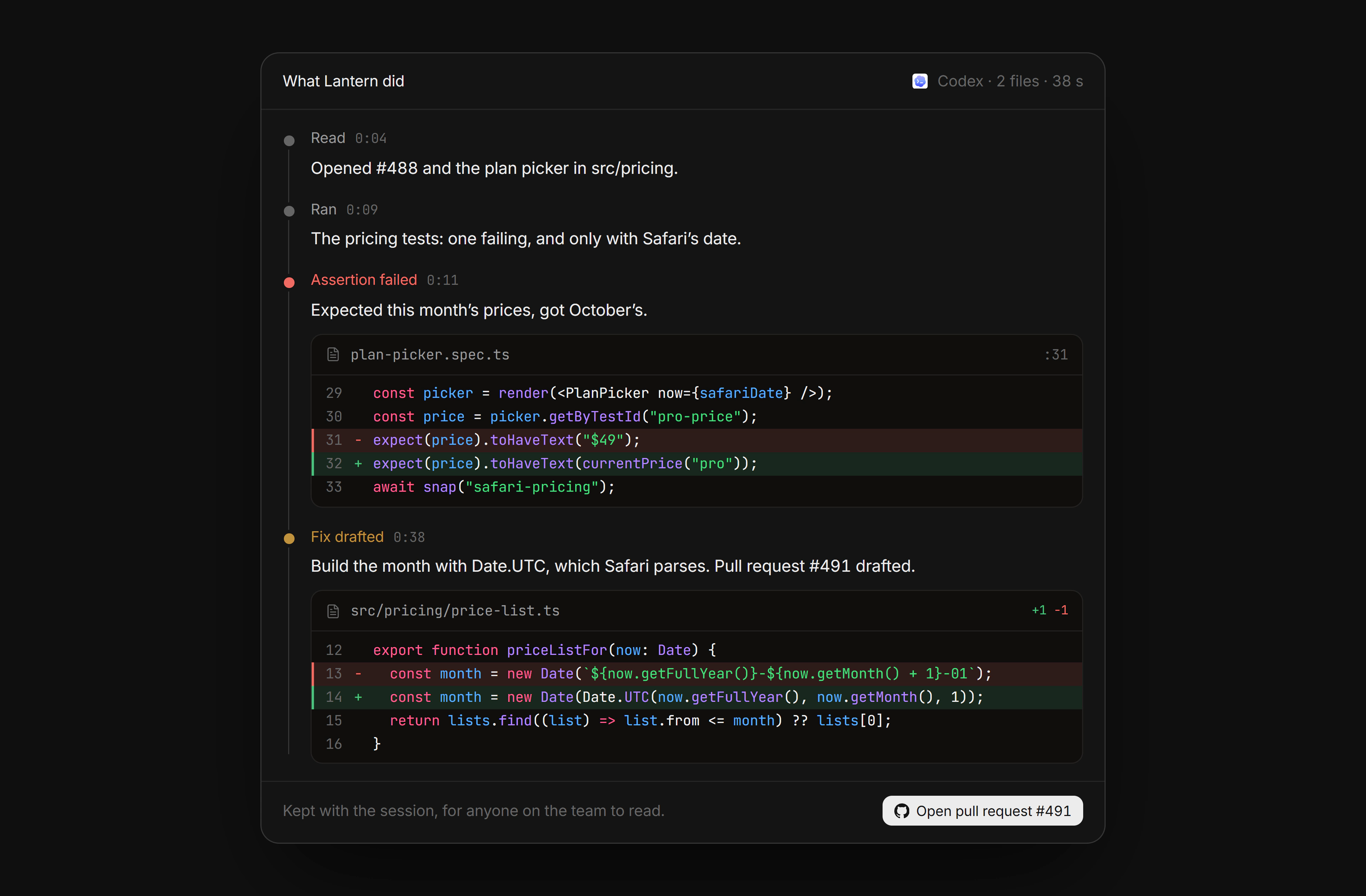
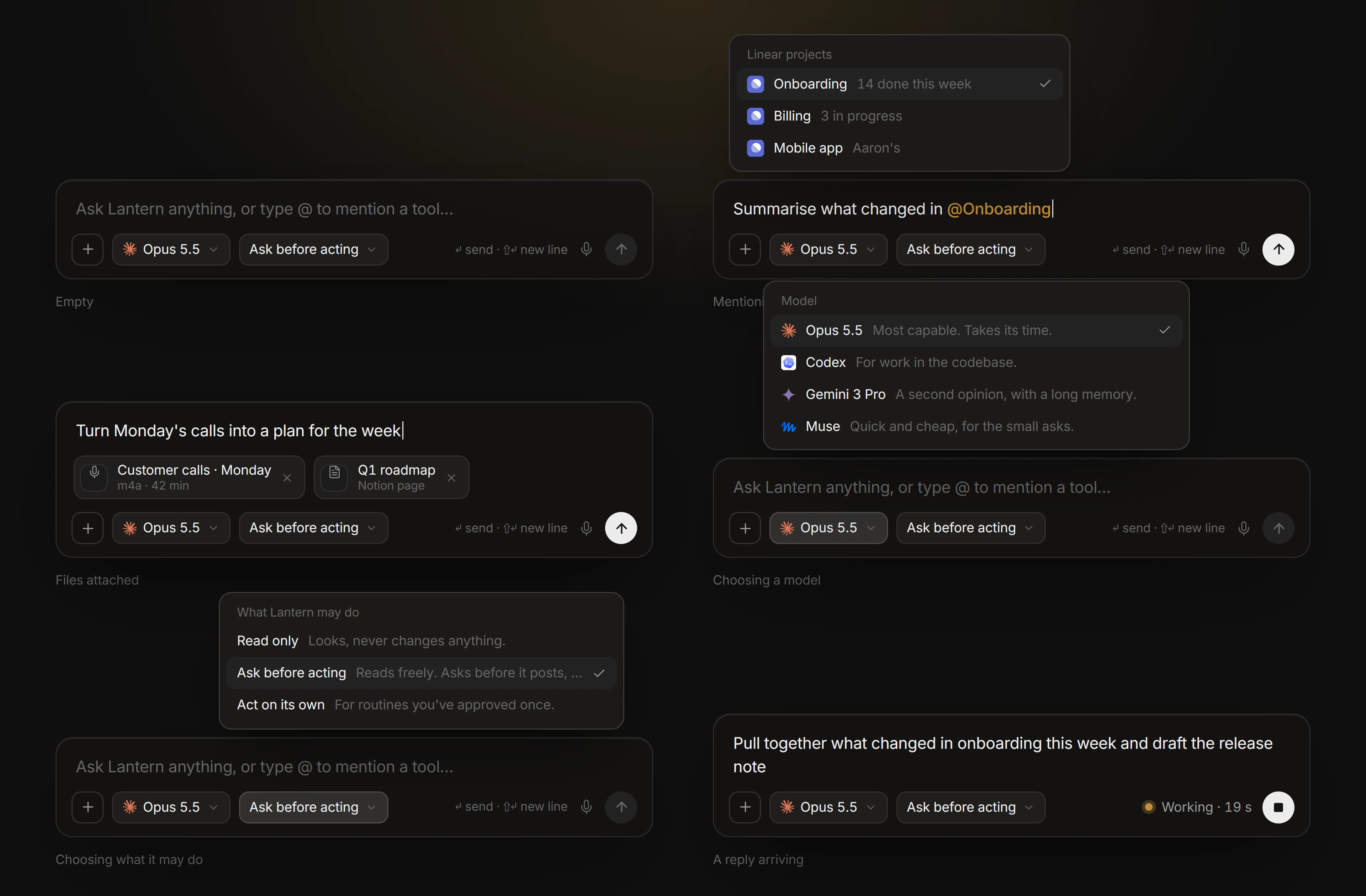
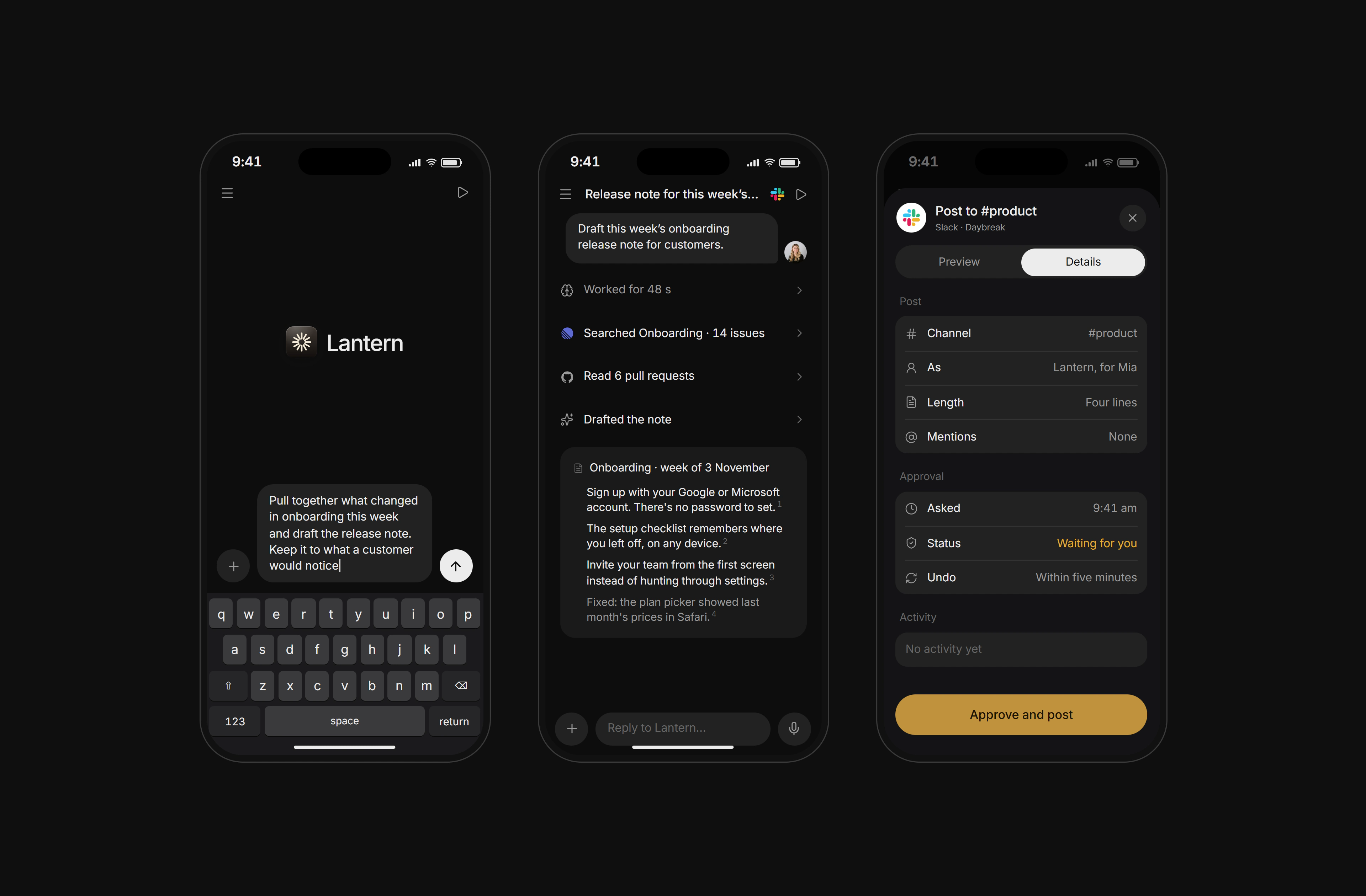
The working opens into a list of steps anyone on the team can read. Lantern can read whatever has been connected without asking, but anything that leaves the workspace, a Slack post, an email, a change in Xero, stops and waits for a person. That line is drawn in the prompt box itself, beside how hard it should think.
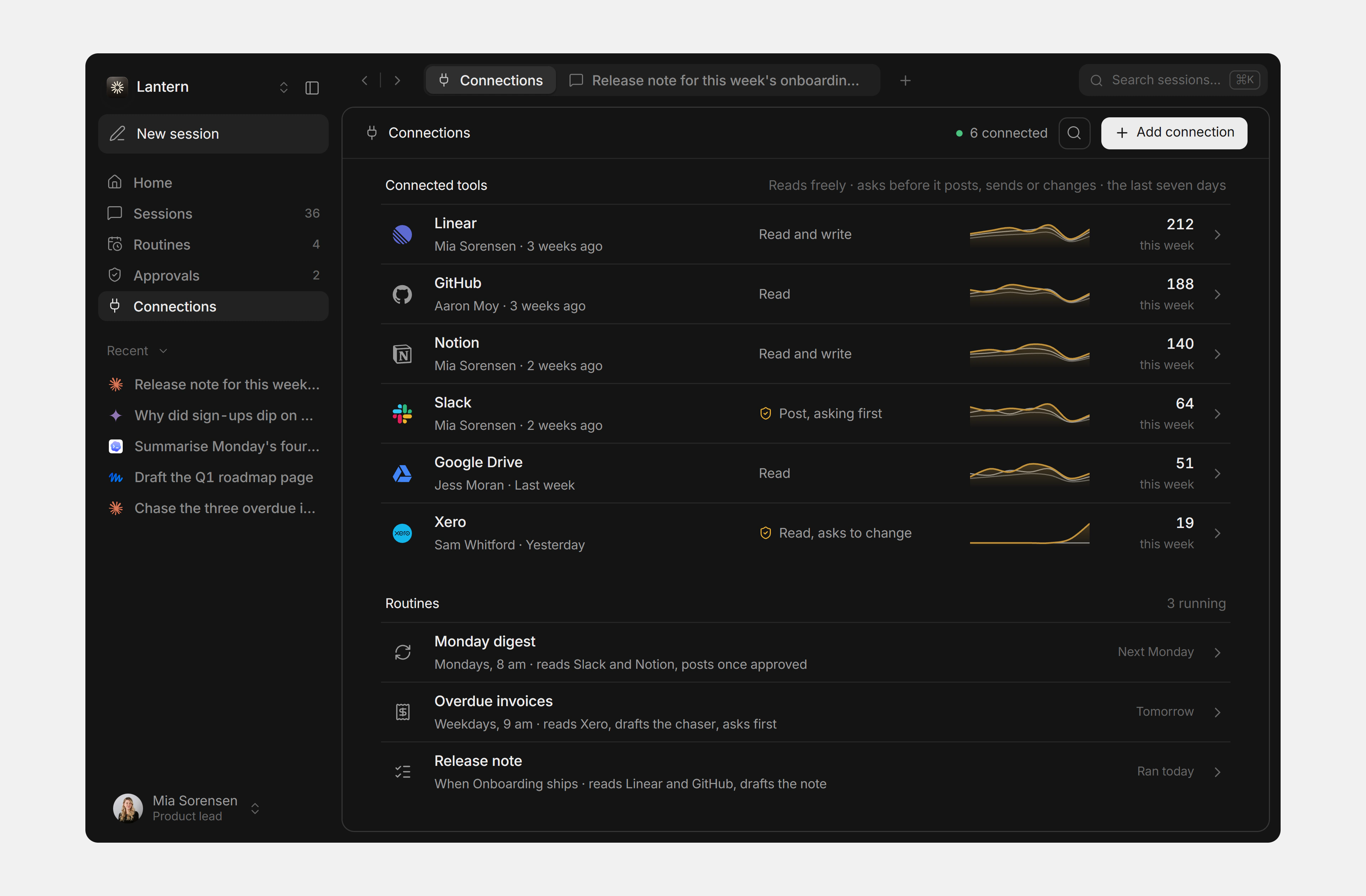
Connections sit on one page: which tools it can read or write, who connected each, a week of use drawn as a small graph, and the routines that run on them. The phone app carries sessions and approvals, so a post can be let through from the bus, and signing in happens over the same painting.
what we shipped
- A dark native home over a dithered painting, with the prompt and suggested asks
- A session as a chat, its working folded under one line and opened in full
- The prompt box in six states, including the model and permission menus
- Connections with a week of use per tool, a phone app with approvals, and signing in
next project
Want something like Lantern? Book a free 30-minute call with Adam, our founder. You’ll leave knowing what to build first, how long it takes and which plan fits.